Specimen file · No. 001 The Backyard Field Guide · $37 · Instant PDF Jackson's Meteorites
Jackson's MeteoritesA field guide

That heavy black rock might be from outer space.

Find out for sure before you wash it, sell it or throw it back on the pile. A plain-English guide for American landowners: the $2 kitchen tests, what it could be worth, who legally owns it, and how to sell it without getting taken.

$75,000what a Michigan farm's old doorstop sold for once it was tested
9 in 800lab-tested "space rocks" that were actually real
10 lbyearly limit on federal BLM land, and you can't sell it

Sources: Central Michigan University · Washington University in St. Louis · BLM IM 2012-182

Host · Jackson
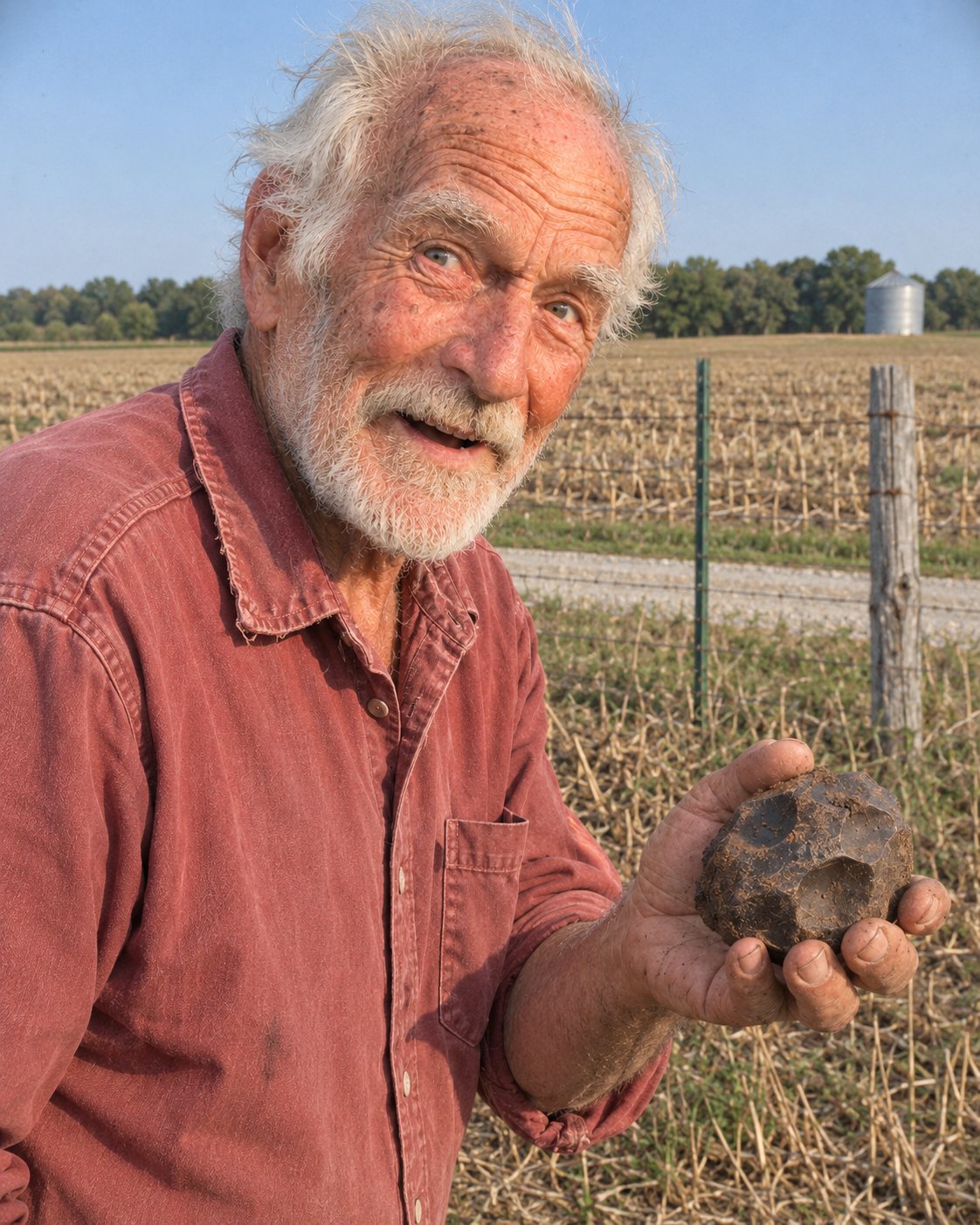
Jackson holding a dark stone at the edge of a farm fieldimages/hero.jpg
4:5 portrait
Rule No. 1

Don't wash it. Don't sell it. Test it first.
I.
The 60-second test

Is your rock worth a closer look?

Four questions. Grab the rock, a fridge magnet and an old coffee mug. This won't prove you have a meteorite (only a lab can do that), but it will tell you if you've got a common impostor.

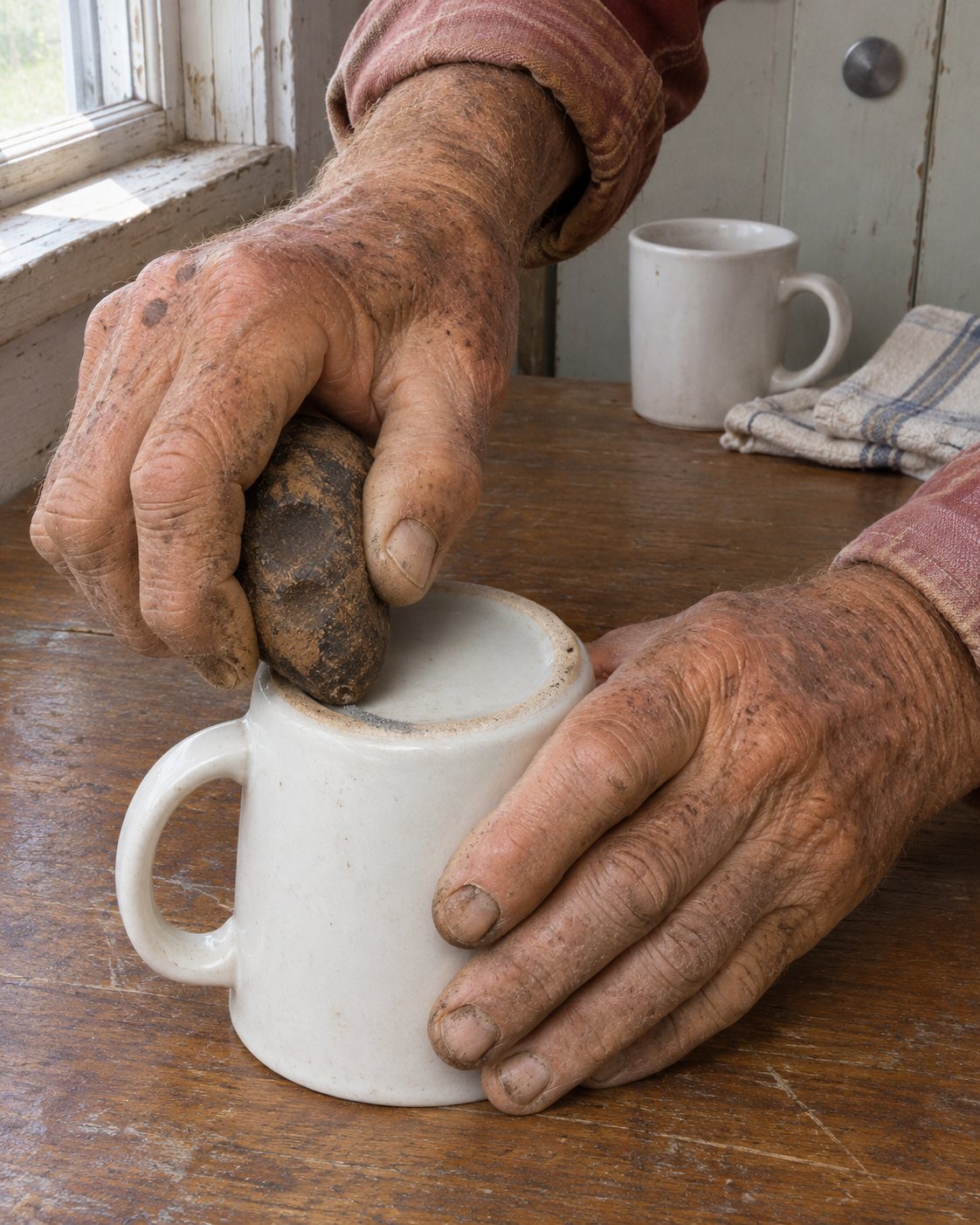
Streak test: scraping a rock on the unglazed bottom of a coffee mugimages/tests.jpg
4:5 portrait
The streak test · Question 3
Question 1 of 4 · Weight

Does it feel heavier than a normal rock its size?

Hold it in one hand and a regular stone of the same size in the other.

Question 2 of 4 · Magnet

Does a magnet stick to it, even a little?

A strong magnet on a string works best. Watch for a pull, not just a clean stick.

Question 3 of 4 · Streak

Scrape it on the unglazed ring under a coffee mug. What color is the line?

Press firmly. Use the rough, unpainted ring on the bottom.

Question 4 of 4 · Surface

Does it have bubble holes, like a sponge or Swiss cheese?

Look closely all over. Small round pits that go into the rock count.

Your result

Get the full guide · $37 →

Based on the identification checklists published by Arizona State University's Center for Meteorite Studies and the Utah Geological Survey. Only an accredited lab can confirm a meteorite.

II.
The guide

One book. Every question you have about that rock.

Is it real? What's it worth? Am I allowed to keep it? Who do I sell it to? Seventeen short chapters on 51 pages, written for people who'd rather hold a printed page than scroll a forum.

$37PDF
PDF · 51 pages · 17 chapters · Printable

From "what is this thing?" to a fair price, step by step.

Most finds are rocks. A few are worth thousands. The difference usually comes down to what happens in the first week: whether it got scrubbed, chipped, sold to the first buyer or tossed back on the pile. This guide walks you through that week in order, with the tests, the rules and the phone calls.

$37 One-time · Instant download
What you get for $37
1
Is It a Meteorite? The Backyard Field Guide

The full guide: 17 chapters, 51 pages, every fact sourced. Reads on any phone, tablet or computer.

2
The Ten-Minute Checklist

Seven questions on one page. Print it, grab a magnet and a tile, and get a first answer outside.

3
The Seller's Toolkit

Word-for-word messages to send a buyer, the seven questions to ask, the warning signs, and an offer comparison sheet.

4
Who to Call in Your State

Every state geological survey by name, plus five printable pages: find record, permission to search, weight test worksheet, offer sheet and kitchen cards.

Get the guide · $37 →

Secure checkout by Gumroad · Card, PayPal, Apple Pay · Download link by email

III.
The math

What it could be worth. And whether it's yours.

The same rock can be worth fifty cents a gram or a thousand dollars a gram. It can be yours to sell, or legally someone else's. Here's the short version. The guide has the long one.

Ledger A

Typical dealer prices, per gram

Ordinary chondriteStony. By far the most common type$0.50–$5
IronHeavy, metallic, strongly magnetic$1–$10
PallasiteMetal with green olivine crystals$20–$100+
Lunar or MartianPieces of the Moon or Mars$1,000+
Rough value calculator
Retail range for a classified specimen $227 – $2,268

What a dealer pays you will be lower than what they sell for. A rare fresh fall can go far higher.

Ranges: Astrowest, Geology.com, ASU Center for Meteorite Studies; fresh-fall premiums: Galactic Stone 2025 market report. Not an appraisal.

Ledger B

Who owns the rock you found?

Your own landSupreme Court of Iowa, Goddard v. Winchell (1892)Yours
A neighbor's or a farmer's fieldThe landowner, even if you found itTheirs. Get it in writing first
Open BLM public landCasual collecting, surface onlyUp to 10 lb a year. Personal use only, no selling
National parksNational Park Service landNo collecting at all
Developed recreation sites, some wilderness areasClosed to casual collectingLeave it

Sources: Goddard v. Winchell, 86 Iowa 71 (1892); BLM Instruction Memorandum 2012-182 and its FAQ; 43 CFR 8365.1-5. State rules vary. This is general information, not legal advice.

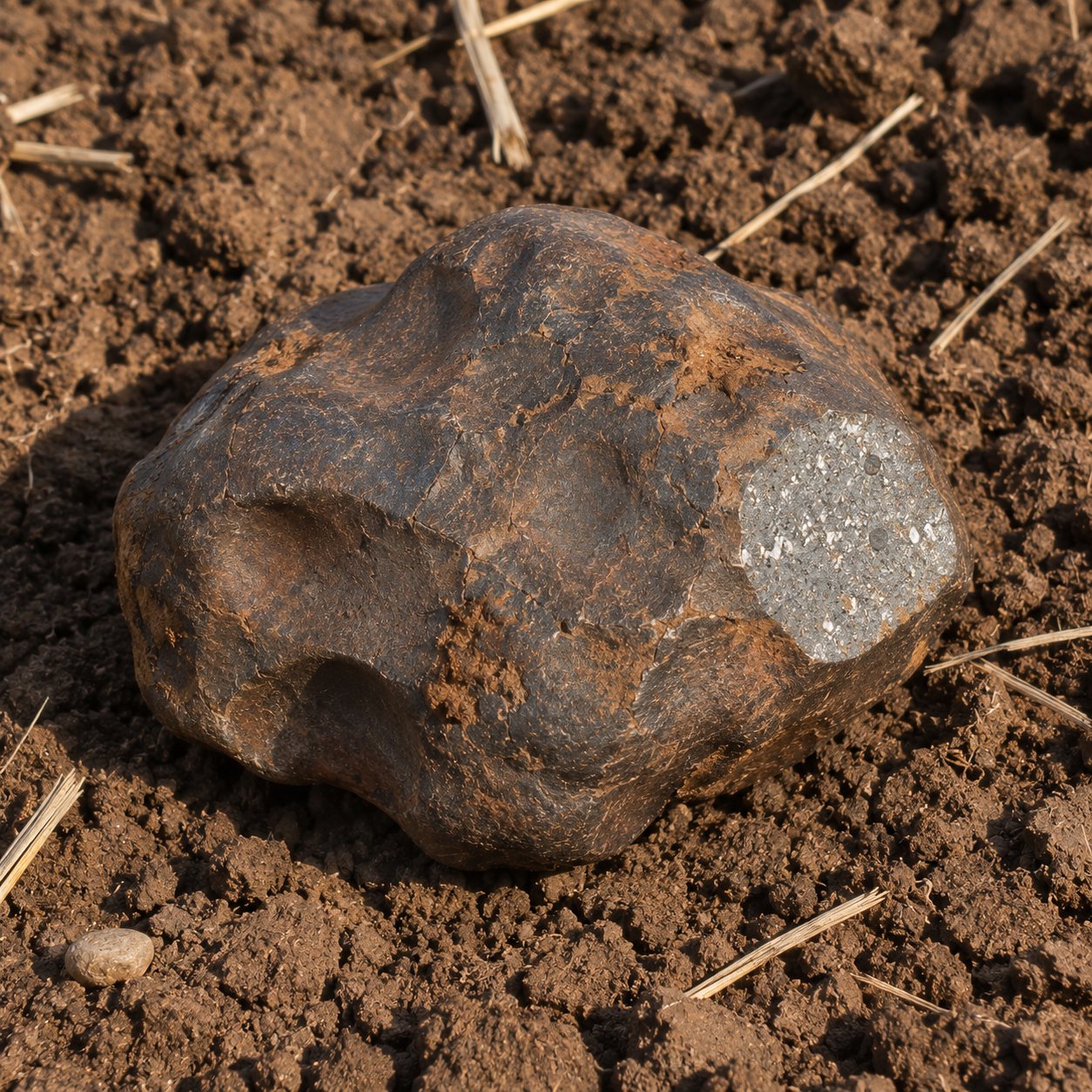
Close-up of a weathered stony meteoriteimages/specimen.jpg
1:1

The expensive mistakes are the boring ones: a wire brush, a garden hose, the first buyer who calls back, and a rock picked up on the wrong side of a fence. All four are covered in the guide.

IV.
What's inside

Seventeen chapters, in the order you'll need them.

Short and plain. Every claim comes from a university meteorite lab, a state geological survey or federal land policy, and the sources are listed in the back.

01

The $75,000 doorstop

How a farm doorstop turned out to be space iron, and how to use this guide.

02

The ten-minute checklist

Seven questions on one page to print and take outside.

03

Six signs it came from space

What a real meteorite looks like, fresh and weathered.

04

Five tests at the kitchen table

Magnet, weight, tile, file and the nickel question.

05

The six rocks that fool almost everyone

And the one test that rules each of them out.

06

Three rocks, three answers

The checklist worked through from start to finish.

07

Same rock, a hundred times the price

What meteorites sell for, and why.

08

Finders are not keepers

Who owns it, by type of land.

09

Where they turn up in America

Finds by state, famous hunting grounds and who owns them.

10

Nine in eight hundred

How to get a real answer without wasting money.

11

Don't sell it yet

Eight things to know before anyone makes you an offer.

12

What to say to a buyer

Word-for-word messages, the questions to ask, the warning signs.

13

The first 48 hours after a fireball

Where the stones really land, and how to pick one up.

14

Keep it dry

Care and storage, so you don't lose value sitting on a shelf.

15

Straight answers to common myths

Hot? Radioactive? Will NASA buy it? The plain truth.

16

Words you will hear

A plain-English glossary of the words dealers and labs use.

17

Sources and fine print

Every source, listed. Nothing in this guide is made up.

Page 5 · Print

The Ten-Minute Checklist

Seven questions, a magnet and a tile. Take it outside with the rock.

Page 45 · Directory

Who to Call in Your State

Every state geological survey by name, so your first call goes to the right office.

Pages 47–51 · Print

Five Printable Pages

Find record, permission to search, weight test worksheet, offer comparison sheet and kitchen cards.

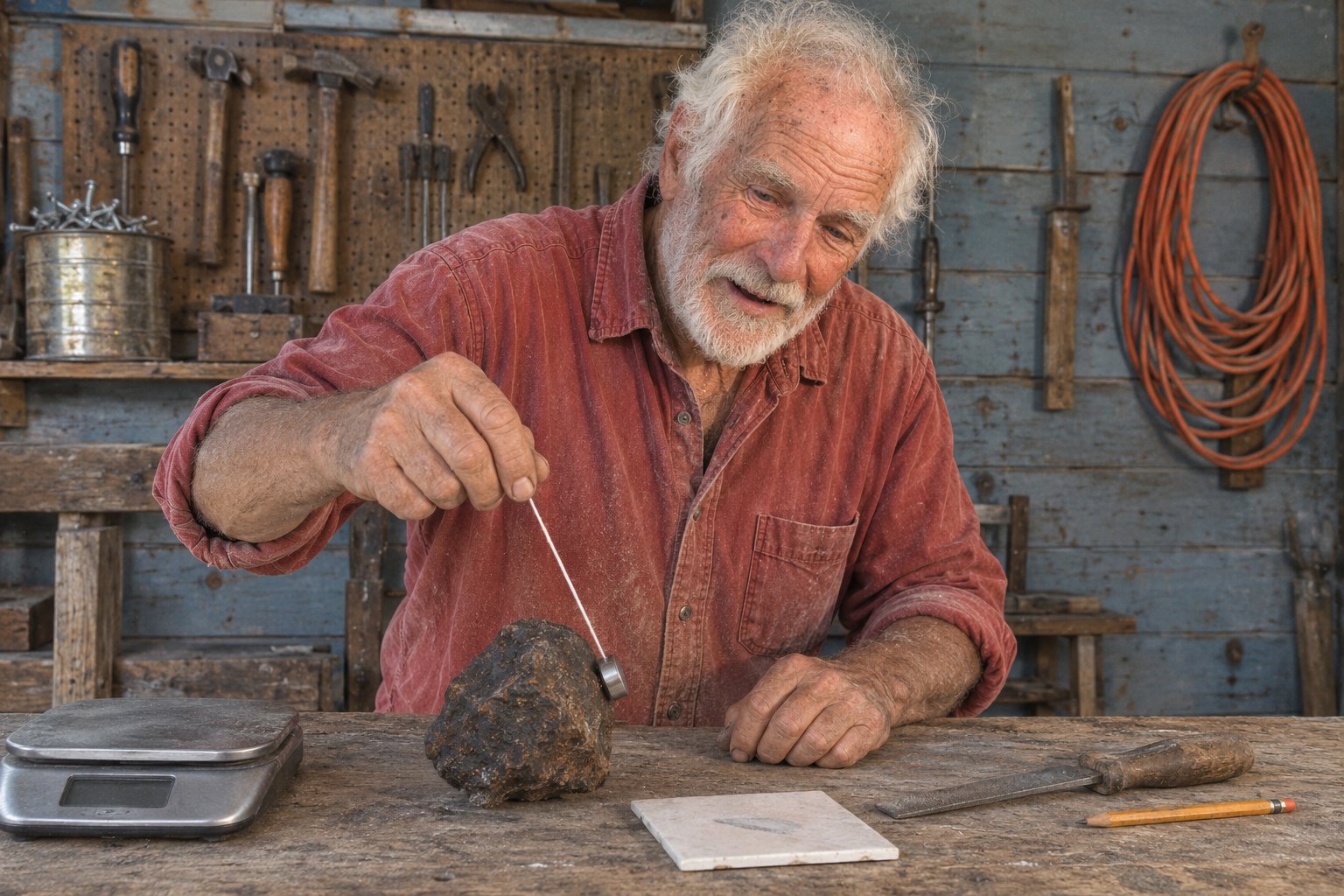
Jackson testing a stone with a magnet at a workbenchimages/author.jpg
3:2 landscape
V. About the guide

From the channel, written down.

Jackson's Meteorites is a YouTube channel about the meteorites hiding in American fields, gardens and old rock piles: how to spot one, what it's worth and who owns it, explained in plain words.

Viewers kept asking the same three questions. Is my rock real? Can I keep it? Who do I sell it to? This guide answers all three in one place, in the order you'll need them, with a checklist you can take outside.

Every fact is checked against university meteorite labs, state geological surveys and federal land policy. Sources are listed at the back of the book.
Watch the channel →
VI.
Questions

Before you click.

Will this tell me for certain if my rock is a meteorite?
No book can do that, and anyone who says otherwise is selling something. Only a lab can confirm a meteorite. What this guide does is rule out the common impostors at home, so you know whether a rock is worth sending in, and exactly how to send it.
I'm not a rock person. Is this too technical?
It's written for people who've never held a meteorite. No jargon without an explanation, and every test uses things already in your kitchen or garage.
What format is it, and how do I get it?
A 51-page PDF you can read on a phone, tablet or computer, or print at home. After checkout, Gumroad emails you a download link right away.
Does it cover the rules in my state?
It covers the rules that apply everywhere in the U.S.: private land, leased land, BLM land and national parks. It also lists every state geological survey by name, so you know who to call where you live.
I think I already found one. Should I clean it first?
No. Don't scrub it, don't hose it down and don't cut into it. Chapter 14, Keep it dry, explains what to do with it in the meantime.
Is checkout safe?
Payment is handled by Gumroad, which processes cards, PayPal and Apple Pay. We never see your card details.
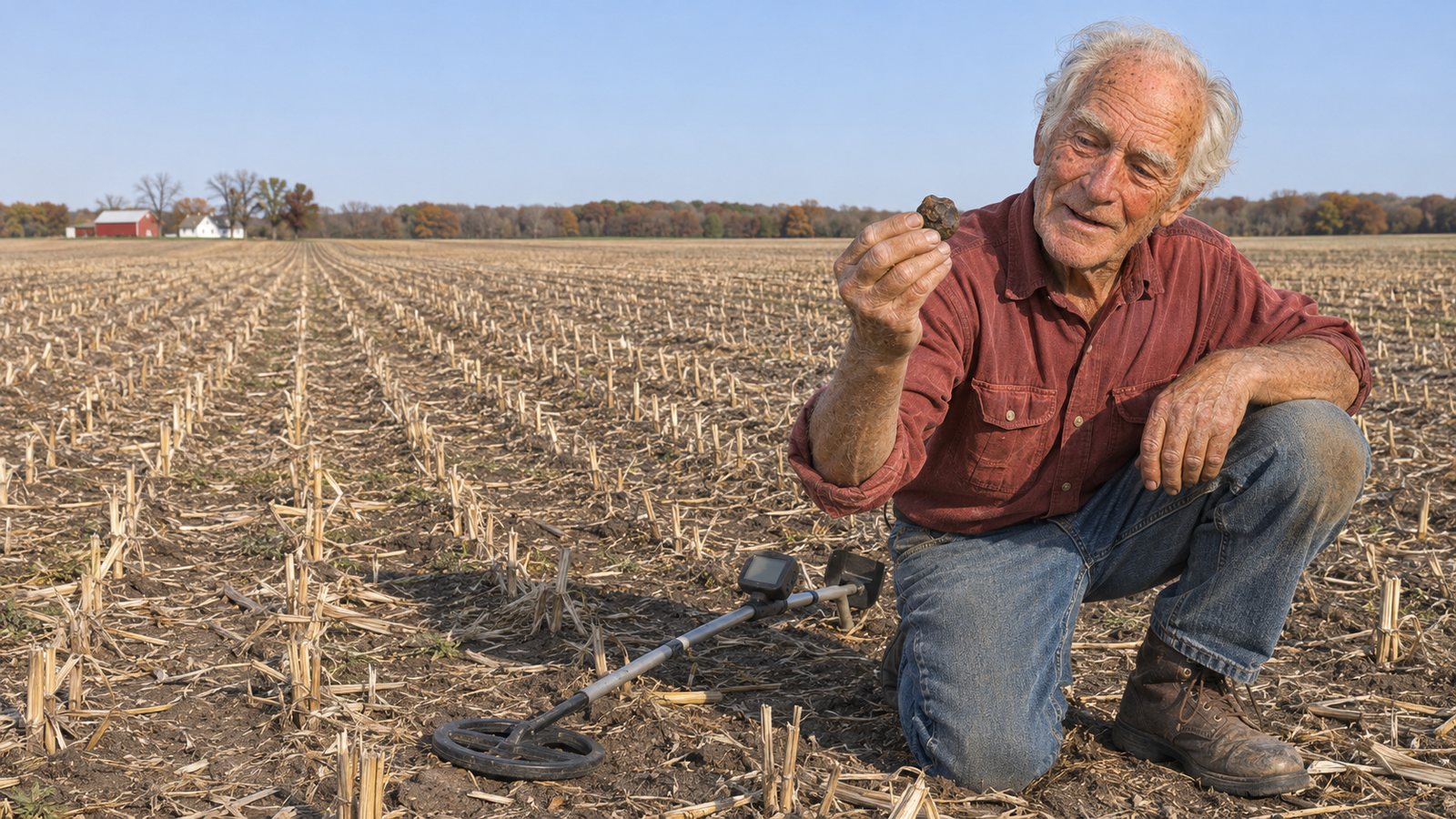
Jackson walking a fence line with a metal detectorimages/field.jpg
16:9 wide
Last call

Before you wash it, sell it or toss it, read this.

Seventeen chapters, a state-by-state directory and five printable pages. $37 once. Instant download.

Get the guide · $37 →
The Backyard Field GuideIs It a Meteorite? · $37Get it →